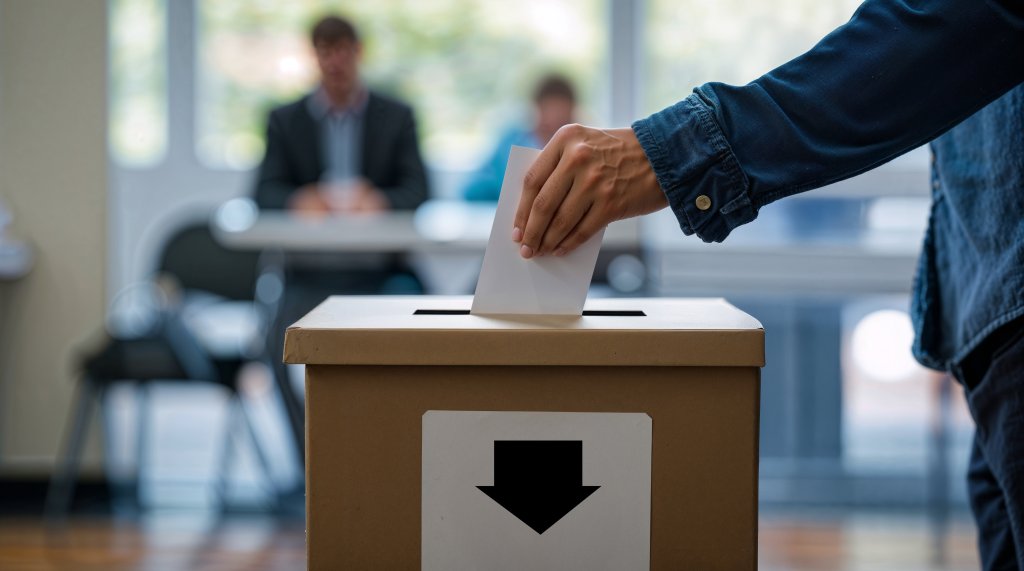
Contemporary nuclear disarmament efforts are taking place in age of democratic backsliding, and therefore we need to reinvest in democracy to reinvigorate disarmament. Read on to find out more in the latest Atomic Anxiety Fellows blog by Samara Shaz…
Nuclear weapons policies have long been “left to the experts,” an amorphous epistemic community with specific language, assumptions, and power over decision-makers. Because of this siloing, the case has been made that nuclear weapons issues are inherently out of the hands of the public, outside of democratic accountability.
But informed experts, both inside and outside of government, have bias. At times, this can be mundane, such as how language shapes our conception of nuclear issues and how cognitive heuristics guide decision-making in security policy.
This bias can also be outright, such as when defense contractors sway politicians and when governments fund non-profits and think tanks working on nuclear weapons policy. So what actually produces accountability for leaders of nuclear weapons states? When are the experts forced to argue their case?
Existing scholarship points us in different directions for actors that create accountability: multilateral institutions (like the UN, specifically the Non Proliferation Treaty), social movements (the nuclear freeze movement in the Cold War, and campaigns for European Nuclear Disarmament, and the modern day Campaign for Nuclear Disarmament and support for the Ban Treaty), norms (the nuclear taboo, and the non-proliferation regime), as well as coercion (through deterrence).
Likely, all these work in tandem to force leaders to think deeply about their actions regarding nuclear weapons and the effects of their actions on others.
Yet, right now, we’re seeing less accountability for leaders of nuclear weapons states in two ways: democratic backsliding and the decline of the liberal international order (LIO).
Democratic backsliding among established democracies has become the new hot topic, particularly in comparative politics. Inside the academy, there’s been a trending increase in the number of academic articles indexed by JSTOR using the term democratic backsliding since 1990.
In 2026, the Journal of Democracy had a special issue on democratic backsliding and the American Political Science Association focused on “democracy under threat.” The academic world echoes the trend in increased media coverage of “democratic backsliding,” with an increase of reports of democratic decay from 2000 to 2019.
These parallel phenomena conceptually align: many academics in the Western world, who enjoy the privilege of disciplinary dominance, have democratic backsliding on the mind.
In contrast to previous types of regime change, notably military coups and popular uprisings, democratic backsliding is a prolonged, gradual process that undermines key institutions outside of government to make autocratic takeover possible.
In regards to nuclear politics, understanding backsliding is particularly important because democratic ideals were central to the establishment and normative spread of the LIO, as well as leadership beliefs about the morality of nuclear stewardship.
At the same time, we see a clear and direct rejection of the LIO: Putin’s invasion of Ukraine, Netanyahu’s continued genocide against the Palestinian people, Trump’s obvious and practiced abhorrance of international norms, treaties and institutions.
Under these conditions, we have witnessed a return to great power competition and nuclear uncertainty. Some argue that the nuclear order has never been stable, that the lack of nuclear war is due to luck.
However, other nuclear theorists have consistently made the case for deterrence: that two rational actors will never produce a nuclear exchange because of mutually-assured destruction. With less strength in the institutions that produce an internationally-understood nuclear status quo and less public strength and domestic ability to constrain leaders, where does that leave leaders of nuclear armed countries like the United States, France, and the UK?
To start, we might wonder how much power publics and international organizations (IOs) have in the nuclear realm. Some would say: not a lot.
While the NPT is longstanding, we still see proliferation and a regime in crisis. We know the UN cannot prevent nuclear weapons states (NWS) from using their nukes, and many important arms control agreements happen – or at least happened – outside of IOs. Beyond that, nuclear politics is commonly cited as an insider’s game, where the cost of entry is an inability to credibly advocate for disarmament.
But international organizations serve as important mediators. At minimum, liberal institutionalism tells us IOs can serve as sites for preference alignment. They also create a forum for globalized democracy, in that all states, regardless of size, have a voice.
While some treaties may not be perfect, or have been internalized, their normative significance can be seen in how leaders justify actions in relation to UN statements, norms, and treaties. International organizations have provided a standardized and common language to articulate, shaping rhetorical boundaries and thus public imaginations.
Decreasing IO leadership and decreasing democracy work in tandem for what obligations leaders feel they have for others. The driving force for liberalism is an obligation to the people, both at the domestic and international level (recognizing that in practice, it produced many ails). This perceived obligation is necessary in forcing leaders towards “non-selfish” actions: in other words, accountability.
Thus, I present the case for reinvigorating disarmament by reinvesting in democracy. Scholars have long noted that rich civil life is necessary for learning how to practice and reproduce democracy.
Investment in reshaping democracy, rhetorical boundaries and associative chains related to nuclear issues is what will allow disarmament advocates to change the terrain of nuclear debates. If we want agency in disarmament, we need to have leaders at least perceive an audience cost in pursuing certain actions – we do that by reinvesting in democracy at the local and international level.
Samara Shaz is a PhD student at Brown University. She was recently awarded a Master’s degree in International Relations at the University of Chicago. She is interested in studying the intersection between norm contestation and nuclear weapons, specifically the politics and rhetorical boundaries of American nuclear weapons. She previously assisted on the Nuclear Security portfolio at the Carnegie Corporation of New York, and also did research at MIT’s Security Studies Program, analyzing the salience of nuclear weapons in American politics.
This blog is part of a series of articles by the Atomic Anxiety in the New Nuclear Age Fellows Cohort. These articles represent the view of the author and not necessarily those of the project as a whole or other individuals associated with the project.


Leave a Reply