Atomic Anxiety in the New Nuclear Age Fellows Scheme – 2026
We are delighted to announce the 2026 cohort of the Atomic Anxiety in the New Nuclear Age Fellows Scheme.
We received 99 applications, and have selected 24 promising candidates to join the year long fellows scheme in order to develop their research and impact in nuclear arms control and disarmament. The Atomic Anxiety in the New Nuclear Age Fellows are based in 14 different countries, and include PhD researchers, early career academics, policy practitioners, and diplomats.
Throughout 2026 the fellows will attend regular meetings with each other and the project team, explore career development opportunities, and share their work on our blog.
The Fellows Scheme seeks to bring together early-career experts in a welcoming online space to discuss and develop their work on arms control and disarmament. The goal is to help both fellows and established experts advance innovative thinking and practice in the field, with the aim of contributing to high impact research to help policy innovation and change.
This is an initiative launched as part of Dr Rhys Crilley’s UKRI Future Leaders Fellowship – Atomic Anxiety in the New Nuclear Age – which focuses on understanding why nuclear weapons remain a persistent feature of global politics and critically assessing how arms control and disarmament efforts can reduce the risk of nuclear war. The Fellows Scheme will be designed and led by the fellows themselves, and supported by the Atomic Anxiety in the New Nuclear Age team of Dr Rhys Crilley and Dr Carolina Pantoliano.
Applications for the next cohort will open later this year.
If you have questions about the Fellows Scheme please contact Dr Rhys Crilley rhys.crilley@glasgow.ac.uk and Dr Carolina Pantoliano carolina.pantolianopanico@glasgow.ac.uk
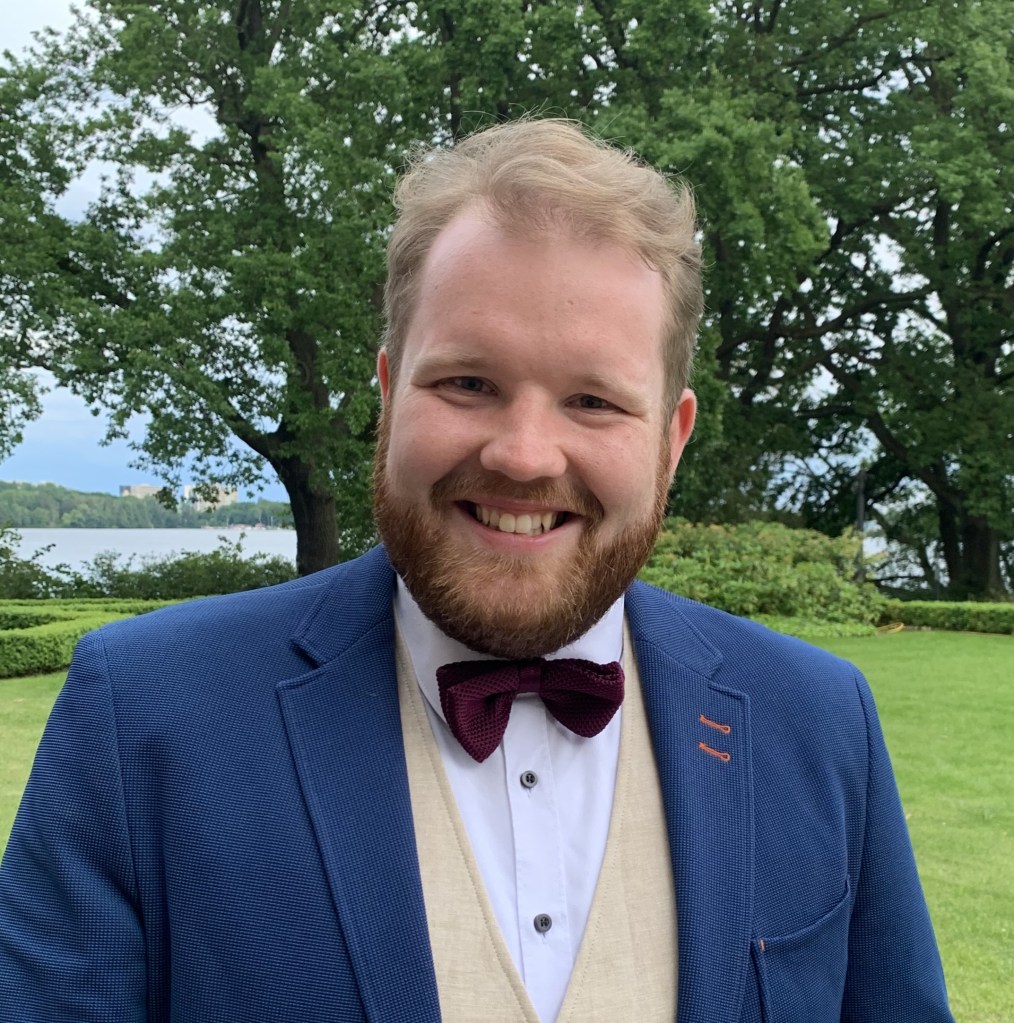
Jannis Kappelmann – Research Associate and PhD Student, University of Hamburg
Jannis Kappelmann is a PhD Student and Research Associate at University of Hamburg. He holds an MA in International Conflict Studies from King’s College London and a Bachelor’s degree in Sociology, Politics and Economics from Zeppelin University, Friedrichshafen. Previously, he worked at the German Federal Foreign Office, the, the UN World Food Programme and the Permanent Mission of Liechtenstein to the UN, held a Fellowship at the German Council on Foreign Relations (DGAP) and co-led the Gender and Disarmament Project at SCRAP Weapons, SOAS University of London. His research focuses on nuclear weapons governance, norms, international practices, gender and digitality in IR.
Risa Pieters – Deputy Director of Global Programs, Asia-Pacific Lead, Obama Foundation
Risa Pieters serves as Deputy Director of Global Programs and Asia-Pacific Lead at the Obama Foundation, where she designs and leads multi-country initiatives that bring together government, civil society, and business leaders to advance peace, cooperation, and long-term global stability. With deep experience across the Asia-Pacific, her work centers on dialogue across difference, pluralism, and collaborative leadership in regions shaped by historical trauma and geopolitical tension. Risa’s commitment to nuclear disarmament and memory preservation is deeply personal. Her mixed Japanese–South African heritage, alongside formative experiences with atomic bomb survivors in Japan and anti-apartheid leaders in South Africa, has shaped her focus on reconciliation, moral responsibility, and the role of collective memory in preventing future violence. She has engaged in trans-Pacific efforts to elevate nuclear history, nonproliferation, and peacebuilding through education and cultural diplomacy. Risa is a United Nations Youth Leader for a World Without Nuclear Weapons and speaks internationally on leadership, memory, and peace.

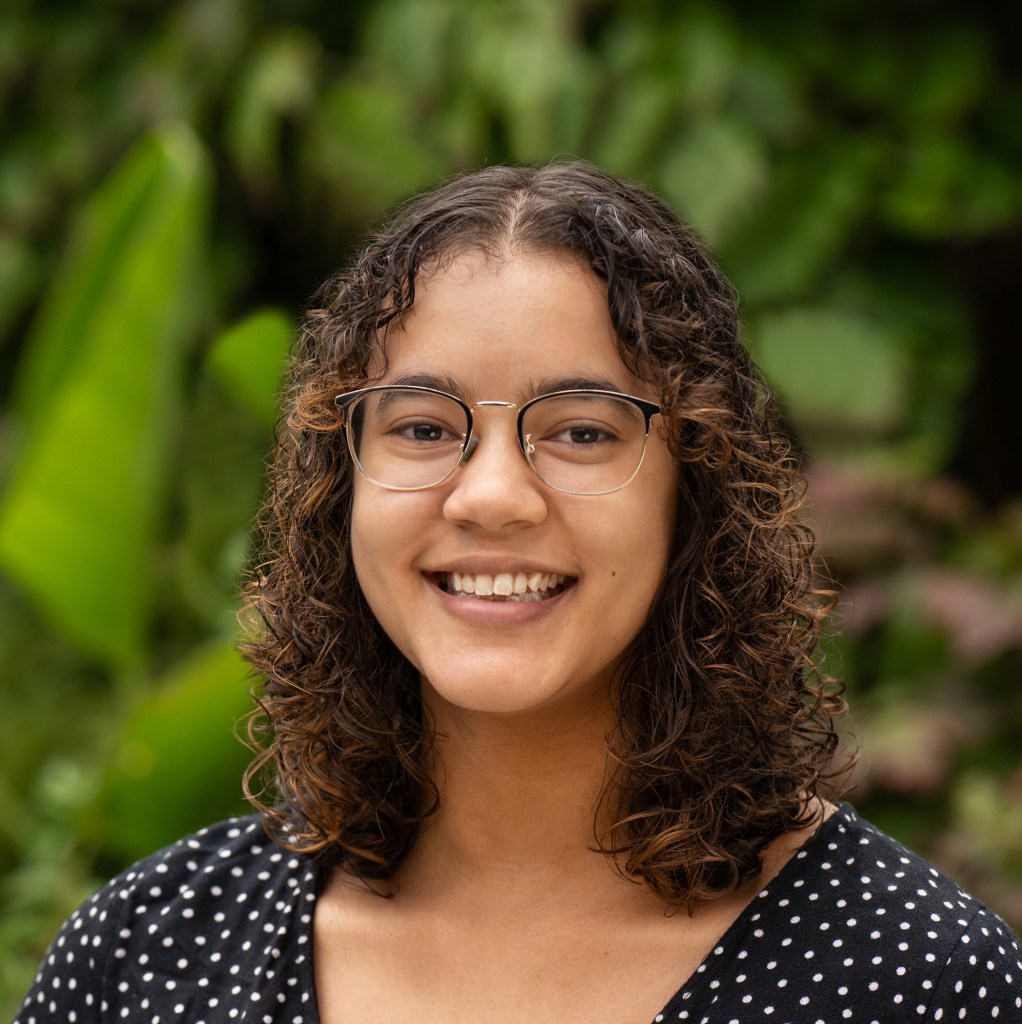
Raven Witherspoon – PhD Student, Princeton University
Raven Witherspoon is a PhD student in Princeton’s Science, Technology, and Environmental Policy (STEP) program and a member of the Program on Science and Global Security. Raven studies the radiological risks and health impacts of nuclear accidents on public health and safety for local communities. She also explores the reconstruction of past accidents to better understand episodes of environmental contamination at former US nuclear facilities and the role of environmental and safety standards. She is also interested in Cold War and post-Cold-War nuclear risk reduction and confidence-building measures and opportunities to adapt and expand these measures within the current US-China nuclear relationship. Raven holds an undergraduate degree in physics with minors in mathematics, political science, and international social justice studies from Virginia Commonwealth University. She also holds a master’s degree in global affairs from Tsinghua University where she was Schwarzman Scholar.
Victoria Mawedo Imaji – Nuclear & Climate Analyst, Nuclear-Aware Africa
Victoria M. Imaji is a Nuclear & Climate Analyst with Nuclear-Aware Africa, working on nuclear disarmament, gender, and environmental advocacy. She is a master’s student at the Institute of Development Studies, University of Nigeria, and is actively involved in youth led peace initiatives, including community peace clubs that encourage dialogue and peaceful coexistence. Victoria participated in the UNODA Youth Leader Fund for a World Without Nuclear Weapons, where she gained practical exposure to international frameworks such as the NPT and the ECOWAS Convention on Small Arms and Light Weapons. She has also worked with the National Centre for the Control of Small Arms and Light Weapons, Southeast office in Nigeria to support youth engagement in peace advocacy. Her work focuses on bringing youth perspectives from the Global South into international nuclear and arms control discussions in ways that are inclusive and practical.


Diana Kuznestova – MA Student in Intelligence and International Security at King’s College London/ Policy Advisor at the Verkhovna Rada of Ukraine (Parliament)
Diana Kuznetsova is an MA student in Intelligence and International Security at King’s College London and serves as a Policy Advisor to a Member of Parliament in the Verkhovna Rada of Ukraine. She has over five years of experience delivering policy advice and analytical support on international security, geopolitics, and defence-related issues. Diana has held research and fellowship roles with leading institutions, including the Cambridge Security Initiative, Fondation pour la Recherche Stratégique, NEREC, and EUNPDC, among others. Her research interests include nuclear security, arms control and non-proliferation, and the implications of emerging technologies for contemporary conflict and strategic stability. Diana has regional expertise in Russia and Eastern Europe, with a focus on the war in Ukraine and its domestic and wider European security implications. Diana is a Board Member for Outer Space within the Global Youth AI Advisory Body, contributing to discussions on responsible AI governance in the space domain.
Ayesha Zafar – Project Manager, Foundation for the Rights of Future Generations (FRFG)
Ayesha Zafar is a security and nuclear policy professional specialising in nuclear arms control, disarmament, and the role of youth in peace and security. She graduated with an Erasmus Mundus International Masters in Security, Intelligence and Strategic Studies from the University of Glasgow and is currently working as a Project Manager at the Foundation for the Rights of Future Generations (FRFG), where she leads projects on intergenerational justice and nuclear security and co-edits the Intergenerational Justice Review. She is also part of the Expert Roster for Project LOOP at the Open Nuclear Network (Vienna), contributing regional insights, nuclear risk analysis, and forecasting support. Previously, Ayesha worked on an EU-funded research project with the Peace Research Centre Prague and the German Institute for International and Security Affairs (SWP) examining nuclear rhetoric and escalation management in the Russia–Ukraine war. Her work focuses on reducing nuclear risks and advancing inclusive, forward-looking approaches to arms control and disarmament, with particular attention to how the EU institutionalises the UN Youth, Peace and Security agenda and the evolving role of youth in nuclear policy.

Vivienne Zhang – Research Technician, University of British Columbia
Vivienne Zhang is a researcher based in Vancouver, British Columbia, Canada. Her work focuses on the space-nuclear nexus and strategic competition between the US and China. She works as a Research Technician at the University of British Columbia and was previously a Consultant in the United Nations Institute for Disarmament Research’s Weapons of Mass Destruction and Space Security Programmes. She also worked at Canadian diplomatic missions abroad in Thailand, Laos, Germany, and Switzerland. Vivienne holds a Master’s degree in International Security from Sciences Po Paris and a Bachelor of Arts degree in Modern European Studies from the University of British Columbia.
Rebecca H. Hogue – Assistant Professor, Department of English, University of Toronto
Rebecca H. Hogue is an Assistant Professor of English at the University of Toronto, where she is a literary and cultural historian of Oceania and the Nuclear Age. Inspired by her upbringing in Hawaiʻi, her research and teaching interests include literatures of the Pacific, environmental humanities, critical militarisms, and settler responsibilities to decolonization. Prior to U of T, Rebecca completed a postdoctoral fellowship at the Mahindra Humanities Center at Harvard University. Her work on nuclear abolition and women’s writing has appeared in a range of venues including International Affairs, the Journal of Transnational American Studies, Nuclear Ban Daily, The Conversation, and CNN Opinion. She is currently finishing her first monograph, Nuclear Archipelagos, which examines the roles of Indigenous women’s arts and literatures in the nuclear abolition movements in Oceania. Rebecca is a board member of the Nuclear Truth Project, an international initiative connecting Indigenous communities, nuclear-affected community members, international and civil society organizations, and governments working for nuclear abolition.
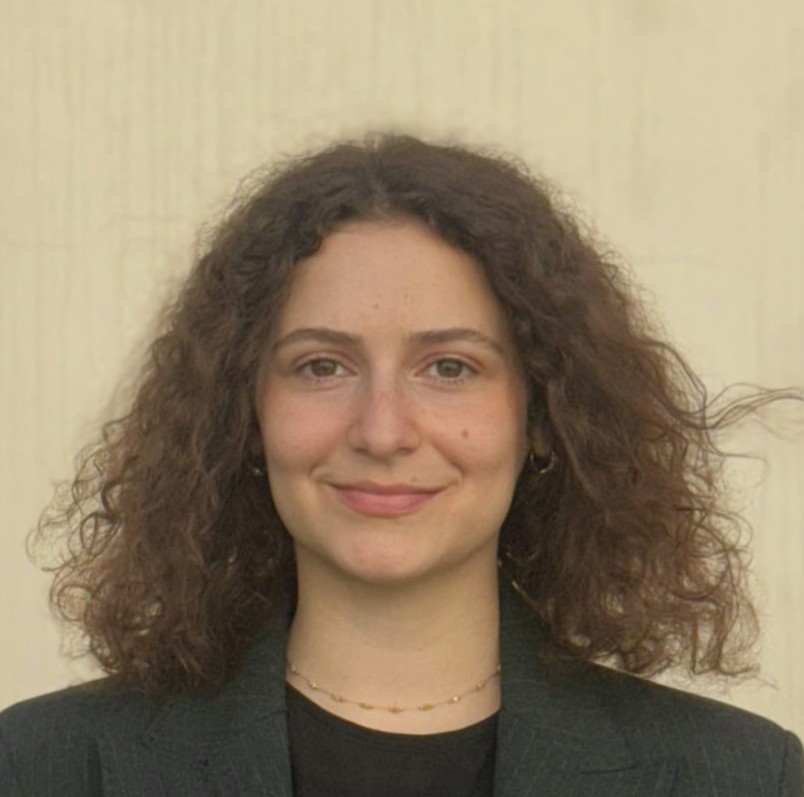
Camilla Braito – Master’s Graduate in International Security Studies at Charles University and Lead Coordinator at Youth Fusion
Camilla Braito is a Master’s Graduate in International Security Studies, specializing in Euro-Atlantic security, arms control, and non-proliferation. After interning at Parliamentarians for Nuclear Non-Proliferation and Disarmament, she now works as Lead Coordinator at Youth Fusion, a youth-led network committed to educating, connecting, and empowering the next generation of disarmament advocates. She contributes to the Emerging Voices Network at BASIC as a policy cycle co-author. Her work includes a publication on nuclear harm reduction in the 2025 BASIC Emerging Voices Network anthology, and she is currently co-authoring foresight-based policy recommendations for the 2026 NPT Review Conference. On a project basis, Camilla also collaborates as a researcher with ITSS Verona in the Russia Team. She is a member of the CTBT Youth Group and, since 2023, has been engaged with ISPI, Italy’s leading political think tank, as a Young Ambassador and Future Leader.

Janani Mohan – Janani Mohan, University of Cambridge
Janani Mohan is researching on nuclear energy and deterrence policy as part of her PhD at the University of Cambridge, where she is a recipient of the Gates Cambridge award. She holds her Master in International Policy from Stanford University, where she was a Ford Dorsey and McCaw Fellow, and her Bachelor in Political Science from the University of California, Berkeley. Janani has extensive experience as a policy analyst including collaborating with the United Nations Innovation Cell to monitor open-source intelligence from the War in Ukraine, consulting with the United Nations Development Programme in South Africa to increase technology access for marginalized youth, and supporting the U.S. Department of State on nuclear nonproliferation initiatives. She is also an avid researcher and author, publishing with organizations like the Bulletin of Atomic Scientists, Stimson Center, and Smithsonian Institution. Beyond her diverse policy interests, Janani co-founded a nonprofit that provided free career development and mental health mentorship virtually in over 35 countries during the COVID-19 pandemic.
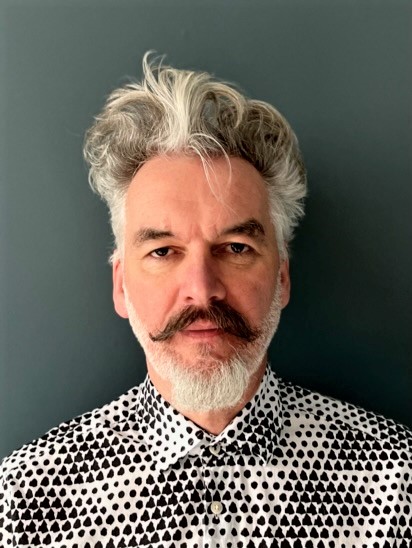
Michael Trainor
Michael is a multidisciplinary artist creating work about complex socio-political factors for citizen audiences and public engagement. He is a Clore Fellow (cultural leadership) and has a PhD in artists’ responses to nuclear weapons, creating a new body of related ‘nucleart’ in the process and is working on an artists’ guide to nuclear weapons. He has a back catalogue of large-scale (non-nuclear) projects in public spaces including sculpture, performance, installation, and collaborations with other artists and communities that unfold over many years. His first public artwork They Shoot Horses, Don’t They? (the world’s largest mirror ball) is now 25yrs old and latest, Everything I Haven’t Consumed (collecting his own consumer packaging since the Millennium) will be exhibited in 2026. He is a former café owner, a native of Manchester (England) now living in Edinburgh (Scotland), and an obsessive collector including a prize-winning collection of nuclear disaster novels.
MD.Arifur Rahman – PhD Candidate, School of Politics & International Relations (SPIR), East China Normal University
Md. Arifur Rahman is a PhD candidate in International Relations at East China Normal University, focusing on nuclear verification, arms control, and disarmament. His research explores the case of the Democratic People’s Republic of Korea (DPRK) and the challenges behind past nuclear verification efforts, particularly analyzing the structural limitations of the International Atomic Energy Agency (IAEA). He also investigates how emerging technologies can be integrated to improve nuclear safeguards and verification processes. With a background in both International Relations and Civil Engineering, he has contributed to discussions on hypersonic weapons, missile defense, and nuclear geopolitics at international conferences.
Shawn Rostker – Research Analyst – Center for Arms Control and Non-Proliferation
Shawn Rostker is a Research Analyst with the Center for Arms Control and Non-Proliferation. His research investigates issues of nuclear strategy, arms control, and their technical and policy intersections with artificial intelligence and emerging technologies. He has a broad regional focus on Asia and the Indo-Pacific. Prior to joining the Center, Rostker worked on technology policy at the Center for Strategic and International Studies, as well as nuclear deterrence and the North Korean weapons program during his time at the Center for Political-Military Analysis. Rostker has held Fellowships with the Council on Strategic Risks and the Mansfield Foundation, and was selected by the U.S. Department of State to serve as a delegate to the P5 Young Professionals Network. He holds a Bachelor’s in International Relations from the University of California, San Diego where he graduated summa cum laude, and a Master’s in Security Studies from Georgetown University.
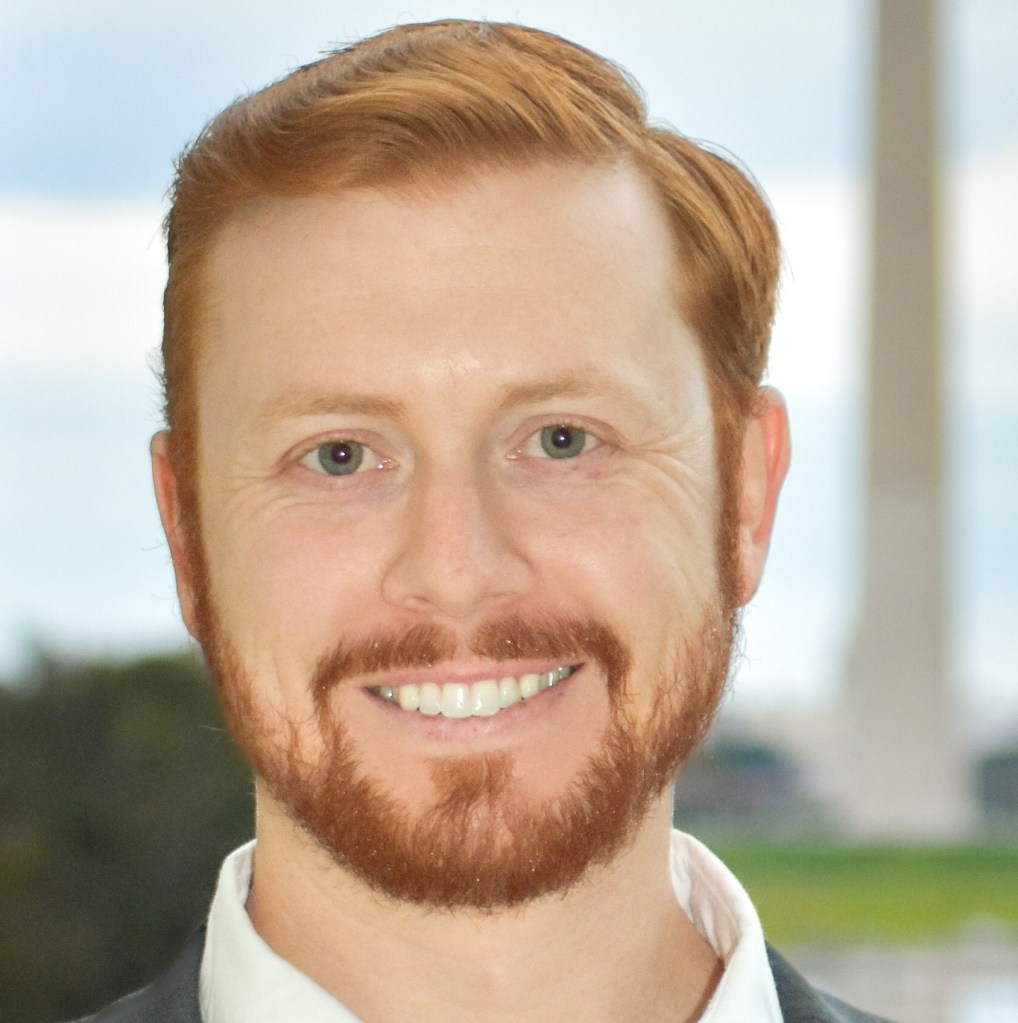
Megan Thomas – University of Liverpool
I hold a BA in History, an MA in Public History and Heritage, and an MA in Archive and Records Management with a specialisation in the management of digital records. I am an ESRC CASE student funded by the NWSSDTP in partnership with English Heritage. My research interests lie at the intersection of histories of emotion and technology, critical archival studies, Cold War heritage, and the phenomenology of imagination. My doctoral project is situated within the context of Cold War culture, built atomic heritage, and unstable interpretations of ‘nuclear deterrence’. Specifically attuned to Cold War visions of possible futures, my research employs a methodologically pluralist approach to illuminate the entangled and affective sociotechnical legacies of British nuclear order.
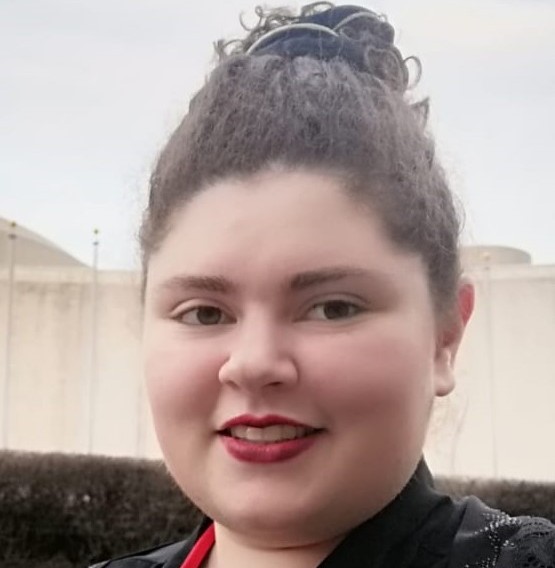
Christelle Barakat – Researcher at the Lebanese Center for Policy Studies (LCPS)
Christelle Barakat is a Researcher on public policies at the Lebanese Center for Policy Studies and an incoming Schwarzman Scholar. She is a Lebanese Fulbright Foreign Student program graduate from the University of North Carolina at Greensboro, holding an M.A. in Peace and Conflict Studies with a concentration on International Peace Development. She is also an Emerging Expert with the Forum on the Arms Trade, an Atomic Anxiety in the New Nuclear Age Fellow, an advisory board member with BASIC EVN, and a mentor in the second cohort of the Youth Leaders’ Fund for a World Without Nuclear Weapons. Over the years, she was selected as a Youth Leader for a World Without Nuclear Weapons (first cohort), Leader to the Future, Leader for Tomorrow, and Youth Champion for Disarmament (first cohort) with the United Nations Office for Disarmament Affairs (UNODA).
Samara Shaz – MA Student, University of Chicago
Samara Shaz is a Master’s student in the Committee on International Relations at the University of Chicago studying the intersection between norm contestation and nuclear weapons, specifically the politics and rhetorical boundaries of American nuclear weapons. Before coming to Chicago, she assisted on the Nuclear Security portfolio at the Carnegie Corporation of New York. Shaz also did research at MIT’s Security Studies Program, analyzing the salience of nuclear weapons in American politics. Shaz earned her BA in Political Science with a minor in Chemistry from Wellesley College, graduating cum laude. As an undergraduate, she conducted research at the Union of Concerned Scientists on the demographic effects on nuclear policy preferences. Her senior honors thesis examined international regimes, contrasting the normative frameworks used by different nuclear weapons treaties.

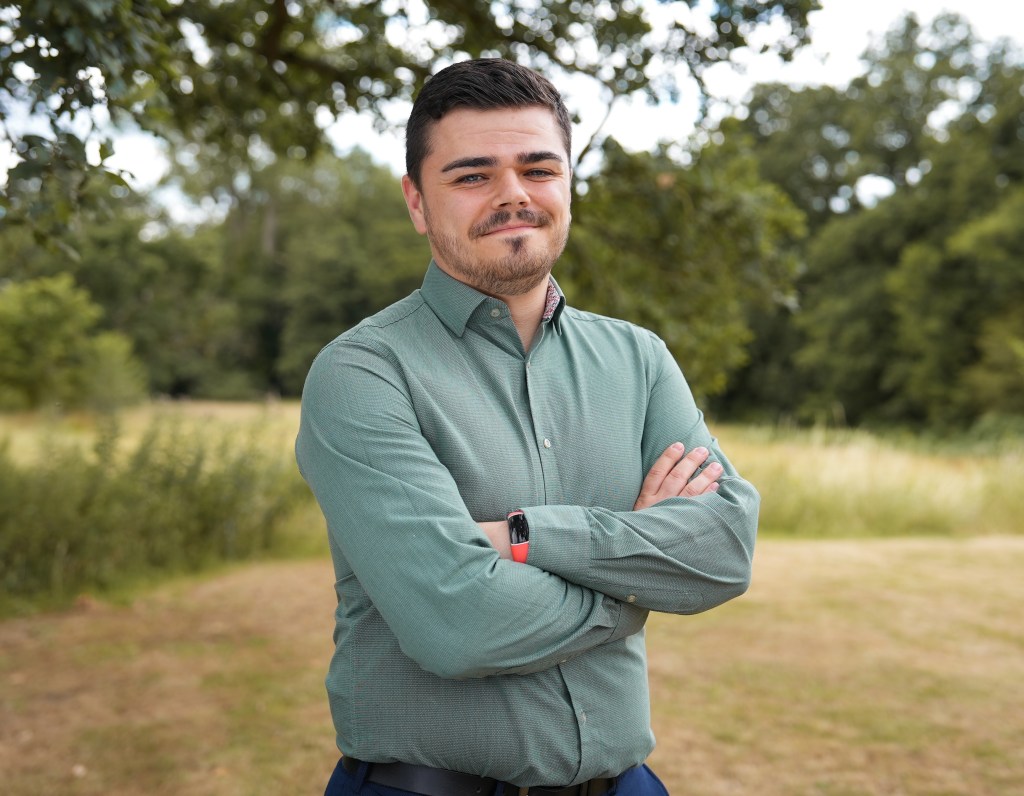
Declan Penrose – PhD Candidate at the University of Manchester and Policy Fellow at BASIC
I am a PhD Candidate at the University of Manchester and my thesis examines the affective economies of nuclear disarmament activism. I am also a Policy Fellow at BASIC where I work on the Emerging Voices Network. In my PhD research, I am particularly interested in the role affect and emotions play in nuclear disarmament campaigns. I am also interested in feminist international relations nuclear weapons scholarship. I was also in the first cohort of the Ploughshares and Horizon 2045 Nuclear Futures Fellowship where I was taught to utilise futures and foresight methodologies. I have utilised this training to organise and coordinate EVN Policy Cycles that utilise foresight methodologies to look at pathways to desirable and undesirable futures for a world beyond nuclear deterrence and the NPT. I previously was Online Coordinator at Youth for TPNW in 2022 and have received diplomacy and negotiation training at the University of Oxford.
Sterre van Buuren – Doctoral candidate, University of Glasgow
Sterre van Buuren is a PhD student at the University of Glasgow studying the participation of private actors in nuclear weapons politics in France and the UK. She is also an affiliated doctoral researcher with Sciences Po’s Nuclear Knowledges programme. In this role, she studies the politics of extended nuclear deterrence in Belgium and the Netherlands. Her research interests revolve around the governance of nuclear weapons and other existential risks, and particularly their intersection with democracy.
Elia Duran-Smith – Analyst, Delegation of Japan to the Conference on Disarmament
Elia is currently an Analyst for the Delegation of Japan to the Conference on Disarmament, supporting the delegation’s work on the Biological Weapons Convention, the Group of Governmental Experts on Lethal Autonomous Weapons and the Nuclear Non-Proliferation Treaty, among others. She has previously an intern with the International Security Programme at Chatham House and was a Graduate Professional within the Security and Technology Programme at the United Nations Institute for Disarmament Research. She was also previously a research fellow at the Comprehensive Nuclear-Test-Ban Treaty Organization. Her research interests include arms control, the impacts of emerging technologies on international security, Indo-Pacific security and transatlantic security.
Bartu Doruk – Graduate Researcher – ETH Zurich
Bartu DORUK is a Master’s student and graduate researcher at ETH Zurich with a background in biotechnology and neuroscience, and experience translating life science research into applied technical contexts. He has contributed to CBRN defense through a NATO research project examining Arctic preparedness and operational challenges, gaining insights relevant to both nuclear and biological security, and will soon join the Biological Weapons Convention team at the United Nations Office for Disarmament Affairs (UNODA). His work focuses on bridging nuclear and biological security, with research and professional interests spanning risk reduction, non-/counter-proliferation, and emerging technologies. He aims to connect scientific and policy expertise to advance responsible innovation, strengthen multilateral security frameworks, and support efforts to reduce global nuclear and biological risks.

Emily Faux – Lecturer, University of Leeds
Emily Faux is a Lecturer at the University of Leeds. She recently submitted her PhD at Newcastle University (UK), where her research examines narratives and fictionality as critical tools for understanding stories about nuclear weapons and war. Her work explores how fictional and narrative forms shape public, political, and cultural understandings of nuclear violence, security, and catastrophe. Emily’s broader research interests include war and conflict narratives, cultural representations of technology and power, and the politics of storytelling. She teaches across media, communication, and cultural studies, with a particular focus on critical theory and narrative analysis.
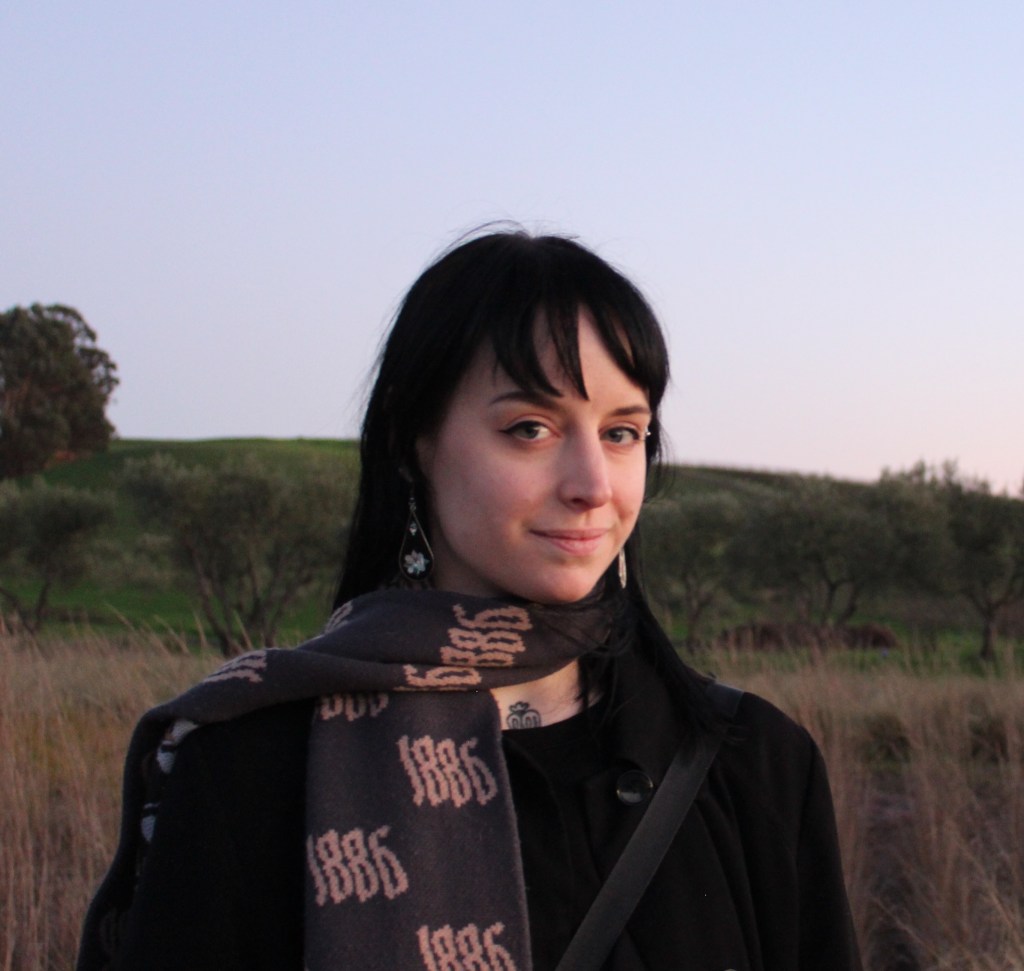
Mays Smithwick – Phd Student, Yale University
Mays Smithwick is a PhD student in the American Studies and Religious Studies departments at Yale University. Their research investigates the co-formations of Western secularism, the military industrial complex, and the US national security myth. They engage Caribbean critique, disability studies, the critical study of secularism, and feminist science and technology studies. Mays is a fellow of Racisms and Colonialisms in the Longue Durée at University College London and Yale, and a fellow of Environmental Humanities at the Whitney Center for Humanities at Yale. They completed a B.A. at the New School and a M.A. at New York University. Mays has worked with the International Campaign to Abolish Nuclear Weapons (ICAN), the New York Campaign to Abolish Nuclear Weapons (NYCAN), and the Nuclear Truth Project. In their research and practice, they are guided by an aim towards Indigenous self-determination and the abolition of borders.
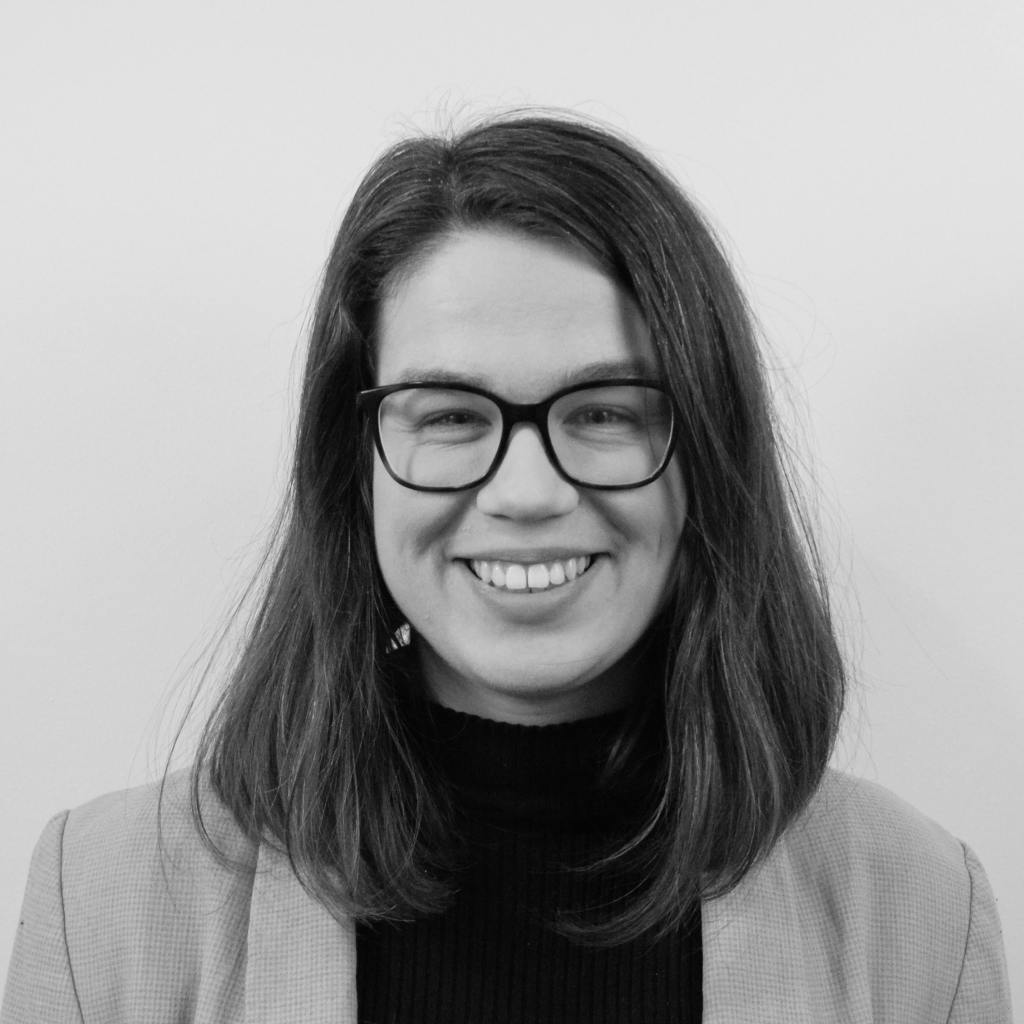
Anna Hauschild – Postgraduate Researcher at the University of Manchester
Anna Hauschild is currently an ESRC funded Postgraduate Researcher at the University of Manchester and an Associate Researcher at the Peace Research Institute Frankfurt. Her research examines the possibilities and challenges of feminist knowledge production in multilateral institutions, with a particular focus on nuclear policy spaces. She explores the relationship of different feminist articulations and practices in times of increasing militarisation. With an interdisciplinary background in Political Science, International Relations, and Gender Studies, she holds an MSc in Gender, Peace, and Security (Distinction) from the London School of Economics (LSE). She has several years of experience across academic, civil society, and policy sectors, having worked and being involved with civil society organisations such as the International Campaign to Abolish Nuclear Weapons and the Women’s International League for Peace and Freedom, as well as policy-oriented research institutions like the Stockholm International Peace Research Institute and the German Council on Foreign Relations.
Andrej Stefanović – Ministry of Foreign Affairs of Serbia
Andrej Stefanovic works as a diplomat at the Ministry of Foreign Affairs of Serbia. During 2023 and 2024, he was a desk officer at the Arms Control Department, and from 2019 to 2023 he was assigned to Serbia’s Permanent Mission to the UN in Geneva, where he covered disarmament and arms control issues. In the course of these assignments, he completed many programs in arms control, including the Arms Control Negotiation Academy (ACONA), the EUNPDC Internship and the CTBTO/CENESS Research Fellowship. He has authored a number of articles dealing with the global arms control architecture, disarmament, and regional security issues.
Atomic Anxiety in the New Nuclear Age Fellows Scheme – 2025
We are delighted to announce the 2025 cohort of the Atomic Anxiety in the New Nuclear Age Fellows Scheme.
We received 119 applications, and have selected 20 promising candidates to join the year long fellows scheme in order to develop their research and impact in nuclear arms control and disarmament. The Atomic Anxiety in the New Nuclear Age Fellows are based in 14 different countries, and include PhD researchers, early career academics, policy practitioners, and diplomats.
Throughout 2025 the fellows will attend regular meetings with each other and the project team, explore career development opportunities, and share their work on our blog.
The Fellows Scheme seeks to bring together early-career experts in a welcoming online space to discuss and develop their work on arms control and disarmament. The goal is to help both fellows and established experts advance innovative thinking and practice in the field, with the aim of contributing to high impact research to help policy innovation and change.
This is an initiative launched as part of Dr Rhys Crilley’s UKRI Future Leaders Fellowship – Atomic Anxiety in the New Nuclear Age – which focuses on understanding why nuclear weapons remain a persistent feature of global politics and critically assessing how arms control and disarmament efforts can reduce the risk of nuclear war. The Fellows Scheme will be designed and led by the fellows themselves, and supported by the Atomic Anxiety in the New Nuclear Age team of Dr Rhys Crilley and Dr Carolina Pantoliano.
Mahmoud Javadi – Doctoral Researcher, Center for Security, Diplomacy & Strategy (CSDS), Vrije Universiteit Brussel (VUB)
Mahmoud Javadi is a doctoral researcher within the Center for Security, Diplomacy, and Strategy at the Brussels School of Governance, Vrije Universiteit Brussel in Belgium. He is involved in the European Research Council-funded project “Competition in the Digital Era: Geopolitics and Technology in the 21st Century” (CODE). Before this, he was an AI Governance Researcher at Erasmus University Rotterdam (EUR) in the Netherlands, contributing to the EU-funded (Horizon Europe) research project “Reignite Multilateralism via Technology” (REMIT). He also has experience with the Carnegie Endowment for International Peace, where his research focused on EU external relations. He holds a Master of Arts in Transnational Governance from the European University Institute (EUI) in Florence, Italy.
Anahita Parsa – Policy Fellow, BASIC
Anahita Parsa is a Policy Fellow on the Non-Proliferation and Disarmament Programme at BASIC, working on both the development of the NPT Monitor, and a framework for Nuclear Weapons Harm Reduction. Previously, she co-coordinated the Emerging Voices Network, and served as Clerk to the APPG on Global Security and Non-Proliferation. She was also Programme Manager at METO, working on the establishment of a Middle East Weapons of Mass Destruction Free Zone. Anahita focuses on nuclear diplomacy, disarmament, and the global nuclear order, with regional expertise on MENA. She is interested in the application of futures and foresight methods, and exploring intersectional approaches (e.g. gender, decolonial thought) to practices of peacebuilding and diplomacy, and their implications for nuclear policymaking. She has previously presented her work at the BISA Annual Conference, UN75, and the LSE Archives Series, amongst others. She has an MA in International Studies and Diplomacy, from the Centre for International Studies and Diplomacy at SOAS, University of London.
Rhys Lewis-Jones – PhD candidate, Cardiff University
Rhys Lewis-Jones is a PhD candidate at Cardiff University’s school of Law and Politics. His PhD thesis centres on the existential dimensions of nuclear politics and renewed great-power competition. His background is in military history and strategic studies but seeks to bridge this knowledge-base with critical nuclear approaches. His forthcoming article ‘Global Nuclear Control: addressing Humanity’s failure to establish Existential Security’ develops the nascent theoretical framework of existential security in a nuclear politics context, also investigating radical plans for disarmament. This involves distinguishing this nascent framework from the national security and human security paradigms. His other research interests include nonstrategic nuclear weapons (NSNWs) and nuclear strategy more broadly. He is drafting a strategic studies article entitled ‘(Un)limited Nuclear Use: Escalate-to-deescalate in Hot War Scenarios’.
Ying Li – Graduate Research Assistant of James Martin Center for Nonproliferation Studies
Ying Li is a Graduate Research Assistant at the James Martin Center for Nonproliferation Studies. Ying holds a Master’s degree in International Relations from Tsinghua University and a Bachelor’s degree in Political Science from Beijing Foreign Studies University. Currently pursuing a second master’s degree in nuclear nonproliferation at the Middlebury Institute of International Studies at Monterey. Ying used to be as an intern at the Chinese Arms Control and Disarmament Association (CACDA) and was selected by the 2023 SIPRI Summer School. Ying was also invited to global forums like the Moscow Nonproliferation Conference and the ISODARCO Arms Control School. Her research interests include arms control, nuclear security, and the impact of emerging technologies, especially AI and hypersonic weapons.
Dr Karly Burch – Lecturer, Waipapa Taumata Rau University of Auckland
Dr Karly Burch (she/her) is a lecturer in sociology at Waipapa Taumata Rau University of Auckland. She is a settler scholar who works at the intersection of science and technology studies (STS), agrifood studies, and critical nuclear studies. Her current research projects explore the material politics of nuclear waste, artificially intelligent robotics in agriculture, and collaborative research for sustainable technofutures. Karly received a PhD in sociology from the University of Otago and an MSc in agroecology from the Norwegian University of Life Sciences and ISARA-Lyon. She is a member of the Science and Technology Studies Food and Agriculture Network (STSFAN) and co-convener of the Feminist, Anti-Colonial, Anti-Imperial, Nuclear Gathering (FACING Nuclear).
Franco Castro Escobar – PhD Candidate, Keele University
Franco Castro Escobar is a PhD candidate at Keele University’s David Bruce Center for the Study of the Americas and a research fellow at the Hiroshima Peace Institute. His research focuses on youth involvement in nuclear disarmament, aiming to better understand how and why young people join or create anti-nuclear youth-based organizations in a decades-long movement that has “grayed”—having less and less young people join the movement. Franco is creating the first anti-nuclear youth oral history archive, documenting the stories of young activists to help them reclaim authorship in the Nuclear Age.
Eleonora Neri – Programme & Research Coordinator at the United Nations Office for Disarmament Affairs (UNODA)
Eleonora Neri is a dedicated professional with extensive expertise in international peace and security, specializing in non-proliferation and disarmament. She holds a Master’s Degree in Advanced International Studies from the Diplomatic Academy of Vienna and dual Bachelor’s Degrees in International Relations and Management from Webster University. Her career has included key roles at prominent institutions such as the Organization for Security and Co-operation in Europe (OSCE), the Permanent Mission of Japan to the International Organizations in Vienna, the Comprehensive Nuclear-Test-Ban Treaty Organization (CTBTO), and the Alva Myrdal Centre for Nuclear Disarmament (AMC) at Uppsala University. These experiences have enriched her understanding of global security challenges and strengthened her commitment to advancing disarmament initiatives. Since 2017, Eleonora has been an active member of the CTBTO Youth Group, where she has worked to promote global awareness of the nuclear-test-ban’s critical importance. Originally from Rome, Italy, she brings a passionate and informed perspective to her work, contributing to the advancement of international peace and security.
Jorge Lopez – Mexican Diplomat
Jorge Lopez is a Mexican diplomat. During 2011-2019, he served as Research and Communication Officer at the Agency for the Prohibition of Nuclear Weapons in Latin America and the Caribbean (OPANAL). During this period, he participated in the negotiation of the Treaty on the Prohibition of Nuclear Weapons (TPNW) and supported the implementation of the Treaty of Tlatelolco. From 2019 to 2022, Jorge was Legal and Project Officer at the UN Office for Disarmament Affairs – Lima Regional Centre (UNODA – UNLIREC), assisting Caribbean and Latin American States in implementing treaties on disarmament and non-proliferation of weapons of mass destruction.
Zeenat Sabur – PhD Researcher, University of Manchester
Zeenat Sabur is a PhD researcher at the University of Manchester. Her PhD is looks at the Treaty on the Prohibition of Nuclear Weapons through the lens of narratives. Specifically it looks at the stories that the US and UK tell to hold the world as we know it – the world with nuclear weapons – in place. I.e. the stories told to make disarmament seem absurd. And equally, the stories that are told by the proponents of disarmament. Zeenat Sabur is also a teaching fellow at the University of Leicester in the department of History, Politics, and International Relations. She has is also a steering group member of Drone Wars UK, and has previously worked as a research assistant at the University of Birmingham, funded by the Open Societies Foundations, on a project looking at the legitimacy and legality of drone warfare.
Felipe Dalcin Silva – Research Director at the South American Institute for Politics and Strategy (ISAPE). PhD Candidate in International Strategic Studies at Universidade Federal do Rio Grande do Sul (UFRGS)
Felipe Dalcin Silva is currently a PhD student and holds a Master’s degree from the International Strategic Studies at the Universidade Federal do Rio Grande do Sul (UFRGS). He also has a Bachelor’s degree in International Relations from the Centro Universitário Curitiba (UNICURITIBA). In addition to his studies, he serves as the Research Director and Associate Researcher at the South American Institute for Politics and Strategy (ISAPE). He is also a Research Fellow at the Comprehensive Nuclear-Test-Ban Treaty Organization (CTBTO) in collaboration with the Center for Energy and Security Studies (CENESS). His main research focus is on nuclear weapons, particularly the role of tactical nuclear weapons as tools for deterrence and compellence. He studies how the development of these weapons systems affects non-proliferation and disarmament regimes and initiatives.
Thomas J Shattuck – Senior Program Manager, Perry World House, University of Pennsylvania
Thomas J. Shattuck is a Senior Program Manager at the University of Pennsylvania’s Perry World House. He is a 2024-25 non-resident WSD-Handa Fellow at the Pacific Forum and a 2024-25 non-resident Research Fellow at the Modern War Institute at West Point. His research focuses on cross-Strait relations, Taiwanese and Chinese domestic and foreign affairs, Taiwan’s semiconductor industry, and the US role in the Indo-Pacific. Shattuck is a Non-Resident Research Fellow at the Global Taiwan Institute, Non-Resident Fellow at the Foreign Policy Research Institute, member of Foreign Policy for America’s NextGen Foreign Policy Initiative, and the Pacific Forum’s Young Leaders Program, where he participated in the 2022 US-Philippines Next-Generation Leaders in Security Initiative. In 2022, he was selected to participate in the Department of Defense’s Joint Civilian Orientation Conference. He was also a member of the 2019 class of scholars at the Global Taiwan Institute, receiving the Taiwan Scholarship.
Cooper Christiancy – Research and Academics Manager, Bernard & Audre Rapoport Center for Human Rights and Justice, University of Texas School of Law
Cooper Christiancy is Research and Academics Manager at the Bernard and Audre Rapoport Center for Human Rights and Justice at the University of Texas School of Law, where he carries out research on human rights, environmental justice, and nuclear disarmament and supports students pursuing careers in human rights. Cooper joined the Rapoport Center from the Promise Institute for Human Rights at the UCLA School of Law, where he served as the Research and Advocacy Advisor to the U.N. Special Rapporteur on contemporary forms of racism. He graduated magna cum laude from the University of Minnesota Law School in 2021 with concentration honors in both Human Rights and International Law.
Ian Fleming Zhou – PhD Candidate, University of Pretoria
Ian Fleming Zhou is currently a PhD candidate at the University of Pretoria in South Africa, focusing on the efficacy of economic sanctions on North Korea nuclear program. He is currently a fellow at the National Committee on American Foreign Policy. He is a former Arms Control Negotiation Academy fellow (2023-2024 cohort). Prior to this, he served as a research fellow at the Comprehensive Nuclear-Test-Ban Treaty Organization. Ian’s areas of specialization are nuclear diplomacy, arms control, nonproliferation and nuclear disarmament.
Sanaa Alvira – Research Associate, Centre for Air Power Studies
Sanaa Alvira is a Research Associate specialising in nuclear policy and related issues at the Centre for Air Power Studies, India, and a Research Assistant at the Centre for the Governance of AI (GovAI). She is also a Marie Sklodowska-Curie fellow at the International Atomic Energy Agency (IAEA) and a recent graduate of the Non-Proliferation and Terrorism Studies master’s programme at the Middlebury Institute of International Studies at Monterey. She previously graduated with another master’s degree in International Relations from the London School of Economics and Political Science. Her past experiences include working at the James Martin Center for Non-Proliferation Studies and the IAEA’s Department of Safeguards. She holds a professional certification in nuclear security offered by the World Institute for Nuclear Security, Austria.
Yerdaulet Rakhmatulla – Founder & CEO, JASA / Co-Founder, Qazaq Nuclear Frontline Coalition (QNFC)
Yerdaulet Rakhmatulla is the Founder & CEO of JASA, the first youth-led organization in Central Asia dedicated to addressing nuclear affairs and AI policy. Additionally, he co-founded the Qazaq Nuclear Frontline Coalition, which promotes nuclear justice and peace. As a representative of his generation at high-level UN conferences, Yerdaulet collaborates with esteemed organizations such as UNESCO and IAEA. His experience includes serving as a Youth Delegate at the TPNW2MSP and participating in the inaugural IAEA Nuclear Security Delegation for the Future at the 2024 ICONS Conference in Vienna. In 2024, he played a key role in co-organizing the Nuclear Survivors Forum, featuring the Secretary General of Nihon Hidankyo, a 2024 Nobel Peace Prize Laureate, in Astana. He also co-led a Study Tour for German civil society organizations to engage with Kazakh nuclear frontline communities in Semey. Currently, Yerdaulet is a Hungaricum Scholar at Ludovika University of Public Service in Budapest. His academic focus lies in AI and nuclear governance, with expertise specifically in Central Asia and the Turkic States.
Hree Putri Samudra – Project Associate for Asia and the Pacific, Global Network of Women Peacebuilders
Hree Putri Samudra is a Project Associate for Asia and the Pacific at the Global Network of Women Peacebuilders, emphasizing gender integration in disarmament and nuclear non-proliferation. Her advocacy extends to co-chairing a Working Group on the humanitarian impacts of nuclear weapons for the Emerging Voices Network, supported by BASIC. This role involves steering discussions to strengthen humanitarian impacts agendas within nuclear policy frameworks. Hree also contributes to global gender equality dialogues as a member of the Beijing+30 Civil Society Steering Committee, organizing forums to promote inclusive participation. With a foundation in International Relations from Universitas Padjadjaran and experience from the University of Pennsylvania, she champions global peace through diplomacy and inclusivity, striving to ensure that women’s voices are central in security discussions.
Laura Rose Brown – PhD Candidate, University of Leeds
Laura Rose Brown is a final year PhD candidate at the University of Leeds and Policy Fellow at BASIC, as part of an ESRC funded collaborative studentship. Her research and policy work focuses on the intersection of nuclear weapons and gender. She has published research in International Affairs and within the European Union Non-Proliferation and Disarmament Consortium Policy Paper Series. Most recently, she has written about impact in relation to gendering nuclear policy, gender in the context of the Nuclear Non-Proliferation Treaty, as well as the implications of a Feminist Foreign Policy for nuclear weapons policy. Laura Rose teaches at undergraduate level in the School of Politics and International Studies, University of Leeds. She holds a Master’s in Social Research (University of Leeds) and a Master’s in International Security (Sciences Po Paris).
Rebekah K. Pullen – PhD Candidate, McMaster University
Rebekah K. Pullen is a PhD Candidate in International Relations at McMaster University and is currently based in Hamilton, Ontario, Canada. She completed her MA in Global Governance at the Balsillie School of International Affairs in 2014, and her research focuses on political theories of violence, socio-cultural considerations of weapons use, and popular culture and world politics. Currently, her dissertation explores depictions of decision-maker agency around nuclear weapons in film. Outside of academia, Rebekah has worked in the not-for-profit sector in Canada, with organizations focused on safe water, global health research, and humanitarian disarmament. She is currently the social media editor for Critical Studies on Security, and soon you can hear her explore the IR academy in Canada as the co-creator and season one host of ISA-Canada’s professional development podcast ‘Acting Like A Doctor’.
Dina Tawfik – Program Associate on Disarmament, Demobilization and Reintegration, Cairo International Center for Conflict Resolution, Peacekeeping and Peacebuilding (CCCPA)
Dina Tawfik is a Disarmament, Demobilization and Reintegration (DDR) Program Associate at CCCPA. Dina is a mentor at the Youth Leader Fund for a World Without Nuclear Weapons, a Junior Associate Non-Resident Fellow at the NATO Defense College and a Research Fellow at the Comprehensive-Test-Ban Treaty Organization (2024). Prior to joining CCCPA, she worked at the Vienna Center for Disarmament and Non-Proliferation (VCDNP) where she conducted research on Weapons of Mass Destruction-Free Zones. Dina has also served as a Teaching Assistant at the American University in Cairo. She holds a Master of Arts in Comparative and Middle East Politics from the American University in Cairo (2023). Her master’s thesis focused on the evolution of nuclear signaling during times of crisis. Her research interests include nuclear politics in the Middle East, the role of civil society in the anti-nuclear weapons movement in the Global South, and the link between disarmament and peacebuilding.
Karen van Loon – Research Fellow in the Security and Defence Programme at the Clingendael Institute. Associate Fellow in the Europeans Affairs Programme at EGMONT – Royal Institute for International Relations.
Karen van Loon is a Research Fellow at Clingendael’s Security and Defence Programme, where she specializes in Arctic geopolitics and broader security and defence issues. Before joining Clingendael, Karen was a Researcher in the European Affairs Programme at the Egmont Institute. She has also held roles as an Educational Assistant at the Political Science Department of KU Leuven Kulak and as a Lecturer in the Master of Teaching Programme at the University of Antwerp. She is a member of the Advisory Board for the Young Women in Non-Proliferation and Disarmament Mentorship Programme of the EU Non-Proliferation and Disarmament Consortium. Karen holds an MA in International Relations and Diplomacy from the University of Antwerp and both an MA and BA in Eastern-European Languages and Cultures from the University of Ghent. Her research interests focus on Arctic geopolitics, arms control, and nuclear non-proliferation.
Join us
If you are an early career researcher or practitioner working on nuclear arms control and disarmament we would love to hear from you!
Share your insights
Our fellows scheme aims to bring together early career experts to discuss their work on arms control and disarmament in a welcoming online space.
Work towards a better future
A series of online events will provide Fellows with the chance to discuss their work, build their networks, hear from established experts, and develop their careers in the pursuit of nuclear arms control and disarmament.
 Atomic Anxiety in the New Nuclear Age