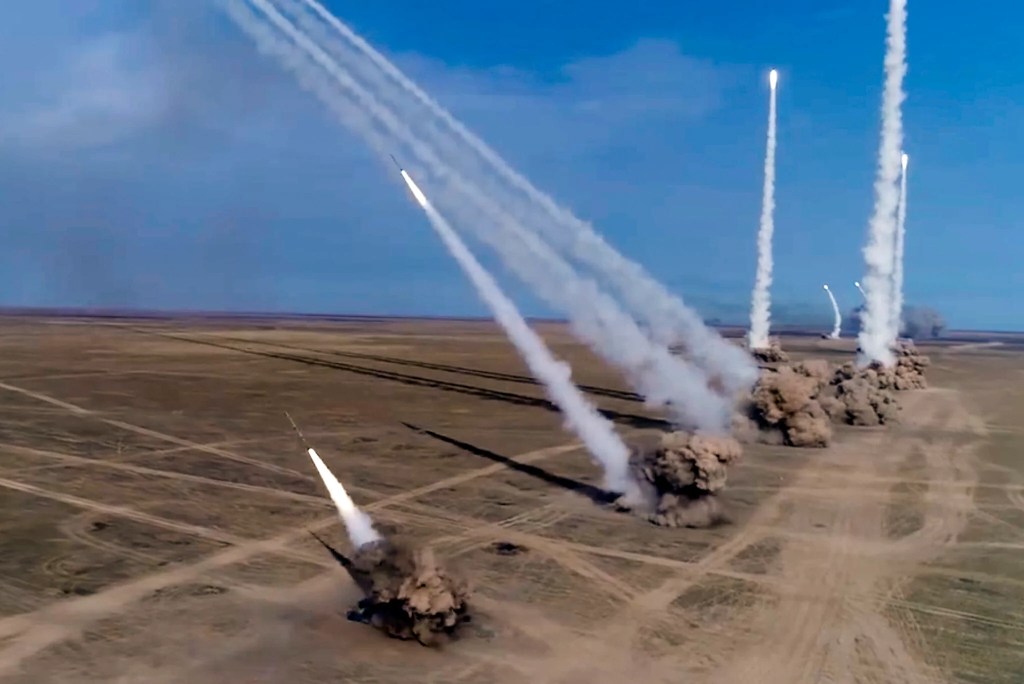
In the latest Atomic Anxiety Fellows blog, Felipe Dalcin Silva argues that a major source of atomic anxiety is the disrespect shown to the Nuclear Non-Proliferation Treaty, especially by the nuclear weapon states. Read on to find out more…
The Nuclear Non-Proliferation Treaty (NPT) is increasingly undermined by its own nuclear-weapon state signatories: the United States, Russia, the United Kingdom, France, and China (the P5).
All of these countries are modernizing their respective nuclear arsenals. All of these countries are disrespecting the NPT, and this is causing atomic anxiety.
Despite a numerical decrease in nuclear weapons arsenals, there is a qualitative enhancement in their capabilities, and London and Beijing are even increasing their number of nuclear warheads and delivery platforms, which is at odds with their Article VI commitments of the NPT.
Another concerning aspect is the ongoing development of tactical nuclear weaponry. Washington continues to maintain this type of weapon on the territory of its allies in the North Atlantic Treaty Organization (NATO), and Russia has recently placed similar weapons in Belarus. This situation also represents a departure from the NPT, as Article I prohibits the transfer of any nuclear weapons to third parties.
The deterioration of the NPT
Predictions made by nuclear weapons experts in the 1960s suggested that within twenty years, approximately 30 countries could acquire nuclear arms. The two superpowers of that era, the United States and the Soviet Union, were particularly concerned about the emergence of new nuclear states, as this could create two significant threats.
First, an increase in the number of nuclear-armed nations would elevate the risk of nuclear weapon use. Second, the potential for nuclear threats from various sources could foster a more independent international system, reducing dependence on the strategic protection provided by each of the superpowers.
The NPT was developed to address these concerns, with its norms crafted in accordance with the interests of the U.S. and the USSR throughout the 1960s. The treaty was formalized in 1968 and entered into force in 1970. Countries that had developed nuclear weapons before 1967 were recognized as nuclear-weapon states, specifically: the United States (1945), the Soviet Union (1949), the United Kingdom (1952), France (1960), and China (1964). Other signatories of the NPT are prohibited from acquiring nuclear weapons.
This is why some countries, such as India and Pakistan, have not signed the NPT, while others, such as Brazil and Argentina, took a long time to decide whether to join. New Delhi and Islamabad anticipated the desire to possess nuclear weapons, while Brasilia and Buenos Aires preferred to keep their options open in case they ever needed such weapons. The last two countries signed the treaty in the 1990s.
Significantly, nuclear-armed states are prohibited from transferring nuclear weapons and/or the knowledge to produce them, directly or indirectly, to countries that do not possess such weapons.
In exchange for refraining from acquiring nuclear weapon systems, these non-nuclear countries are entitled to receive knowledge and technology for the peaceful use of nuclear energy, including for electricity production (Articles I, II, and IV).
Nuclear-armed states are also encouraged to reduce tensions related to nuclear weapons, particularly through measures aimed at decreasing the number of nuclear arms (Article VI).
Since its inception, the NPT has faced various criticisms. First that it creates a division between countries that possess nuclear weapons and those that do not, fostering an imbalanced international order where non-nuclear states must rely on the assurances of nuclear states that they will not be subjected to intimidation or nuclear attacks.
Second, that the NPT designates the International Atomic Energy Agency (IAEA) as responsible for verifying compliance with the treaty among non-nuclear-weapon countries, which undergo extensive scrutiny. In contrast, nuclear-armed states face minimal compliance demands, leading to a third criticism: that the NPT does not establish norms or timelines for these states to reduce their arsenals.
It is essential that we identify both clear and indirect violations of the Nuclear Non-Proliferation Treaty (NPT). Despite the decrease in quantity of nuclear weapons since the end of the Cold War, both Washington and Moscow are continually improving their nuclear weapon systems. This means that qualitative advancements have counterbalanced the reduction in the number of nuclear weapons. Nuclear weapon systems are increasingly precise, faster, and, in some cases, more destructive.
Other NPT signatory states with nuclear capabilities are following a similar trajectory. All have ongoing plans to enhance their nuclear weapons delivery systems and/or their nuclear warheads. This clearly constitutes a direct disrespect of the NPT, as the efforts to refine nuclear weapons capabilities serve to offset any reductions in quantity. Consequently, one might question whether Article VI of the treaty is being violated, given that these developments are escalating the nuclear arms race.
Countries such as China and the United Kingdom are disrespecting the NPT in more observable ways. Evidence suggests that China intends to increase its nuclear arsenal from approximately 500-600 warheads to around 1,500 by 2035. Meanwhile, the UK has made official statements indicating that it will increase its number of nuclear warheads by 40%.
Additionally, longstanding agreements regarding nuclear weapons that have historically contributed to the reduction of warheads by Russia and the USA since the end of the Cold War are now eroding and this contradicts the spirit, if not the letter, of Article VI of the Non-Proliferation Treaty.
Another serious concern, especially in light of the ongoing war in Ukraine, is the potential use of tactical nuclear weapons. Russia has approximately 1,500 platforms available for deploying this type of weaponry, and there are worries that the Kremlin may consider using these weapons in Ukraine.
In contrast, the United States has approximately 200 tactical nuclear weapons, with half of them stationed in the territories of five NATO allies. The U.S. argues that, due to Russia’s superior numbers, it must enhance both the quantity and the quality of its tactical nuclear arsenal, as evidenced by the gradual introduction of the B61-12 and the B61-13, which can yield up to 360 kilotons.
As the United States maintains tactical nuclear weapons on European soil, Washington is disrespecting Article I of the NPT, which prohibits the transfer of any type of nuclear weaponry to third parties. The U.S. maintains that these weapons remain under American control; however, there is no assurance that ownership would not shift to American allies during a potential crisis. Since June 2023, Russia has deployed non-strategic nuclear weapons in Belarus. Several major nuclear powers are now further deviating from Articles I and II of the NPT.
The development of increasingly sophisticated and precise sub-strategic nuclear weapons may allow for the destruction of specific targets with minimal collateral damage. This could make the use of such weapons more appealing, as, despite remaining nuclear weapons, their effects would be limited to smaller areas. However, due to the risk of nuclear escalation between countries possessing these weapons, it is more plausible that they would be used against states without nuclear arsenals, as these states cannot retaliate effectively.
This scenario raises questions about the relevance of the current NPT regime. If tactical nuclear weapons serve as tools of intimidation against non-nuclear states, what is the purpose of maintaining the Nuclear Non-Proliferation Treaty for non-nuclear-armed countries?
Other issues placing the NPT under strain include AUKUS, which aims to equip Australia with nuclear-powered submarines. The main issue generating unease is the plan for these Australian submarines to be powered by uranium enriched to around 90%, which is the same level required for the production of nuclear weapons. Despite assurances from Washington and London that they will supply Australia with already enriched uranium, there are concerns that Australia may eventually gain access to fissile material that could potentially be used to create nuclear weapons. This situation raises the possibility of a violation of Articles I and II of the Nuclear Non-Proliferation Treaty.
The NPT was designed to establish two categories of states: those that possess nuclear weapons and those that do not. The commitments made by the nuclear-armed members of this treaty have not been fully honored, and these states have engaged in numerous non-compliances of the NPT. What then are the consequences of undermining the systems designed to prevent nuclear proliferation?
Conclusion
Regardless of how transgressions occur, they all undermine confidence that the NPT will achieve its ultimate goal: the non-proliferation and elimination of nuclear weapons. With the diminishing respect for NPT norms, two distinct paths emerge: one for states that already possess nuclear weapons, and another for those that do not.
For the former, it is increasingly evident that nuclear arsenals are either expanding in size or becoming more sophisticated. In a multipolar world characterized by international competition, investments in nuclear delivery systems are increasing, heightening the significance of these weapons. This situation clearly disregards Article VI of the treaty.
Conversely, the actions of nuclear-armed states may lead more countries without such capabilities — particularly those feeling threatened by nuclear armed states, such as South Korea, Japan, Ukraine, Poland and Iran — to reconsider their stance. If pressure and appeals to non-proliferation regimes fail to impact nuclear-armed states, why should non-nuclear states continue to adhere to these regimes?
The current global environment is not conducive to non-proliferation. The NPT has successfully prevented many potential nations from acquiring nuclear weapons, fulfilling one of its primary functions.
However, the efforts by nuclear powers to reduce the role of these weapons are far from ideal, mainly because the NPT regime lacks a robust institutional framework for nuclear disarmament among the P5 States.
Felipe Dalcin Silva is currently a PhD student and holds a Master’s degree from the International Strategic Studies at the Universidade Federal do Rio Grande do Sul (UFRGS). In addition to his studies, he serves as the Research Director and Associate Researcher at the South American Institute for Politics and Strategy (ISAPE). He is also a Research Fellow at the Comprehensive Nuclear-Test-Ban Treaty Organization (CTBTO) in collaboration with the Center for Energy and Security Studies (CENESS).
His main research focus is on nuclear weapons, particularly the role of tactical nuclear weapons as tools for deterrence and compellence. He studies how the development of these weapons systems affects non-proliferation and disarmament regimes and initiatives.
This blog is part of a series of articles by the Atomic Anxiety in the New Nuclear Age Fellows Cohort. These articles represent the view of the author and not necessarily those of the project as a whole or other individuals associated with the project.
 Atomic Anxiety in the New Nuclear Age
Leave a comment