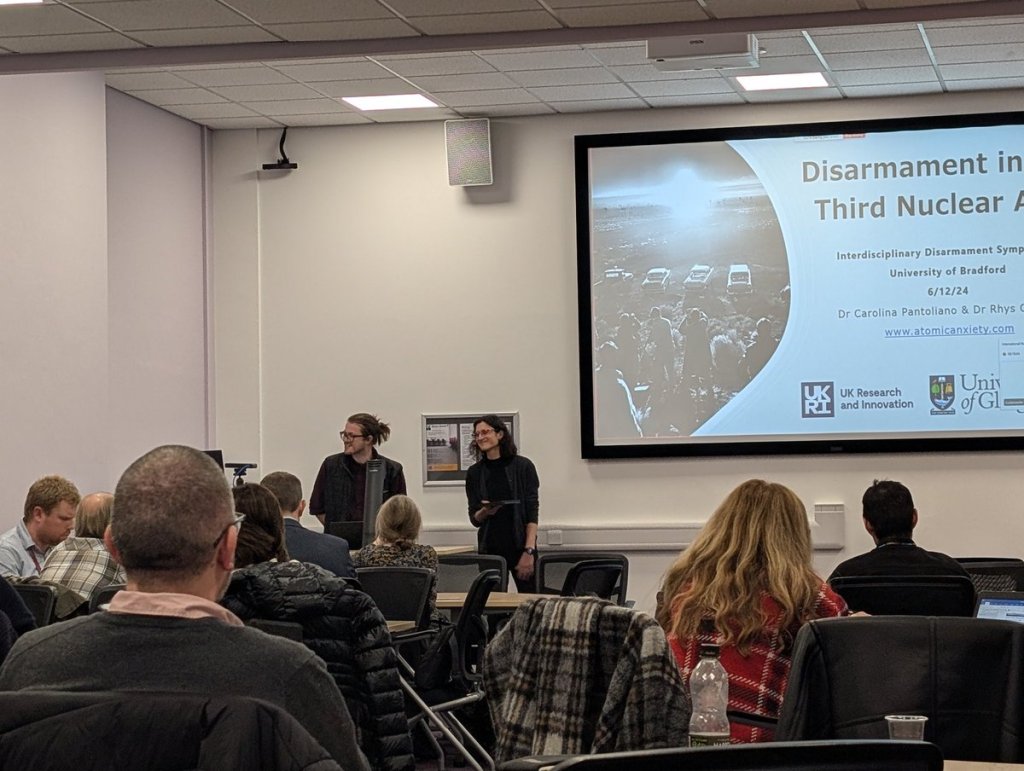
On 6 December 2024, the Atomic Anxiety team participated in the University of Bradford’s First Disarmament Symposium. We presented our first piece of work on disarmament in the third nuclear age.
As pioneers in the field of peace studies, the University of Bradford brings together a decades-long global reputation and experience in multidisciplinary research on developing and sustaining peace. We are grateful to Dr Becky Alexis-Martin and, our project partners, the International Campaign to Abolish Nuclear Weapons, for organising the workshop as well as to the Department of Peace Studies at the University of Bradford for hosting the event.
With an impressive programme, the workshop had the collaboration of sixty in-person delegates, twenty-eight online participants and forty speakers. Ranging from art, theatre, and fashion to NATO’s ambitions and deterrence strategy delegates presented works that challenged convention wisdom on nuclear weapons politics and disarmament. Building on a wide array of methodological perspectives, works illustrated the different mechanisms through which nuclear weapons are made imaginable. Speakers pushed the audience to think creatively about how the legitimacy of nuclear weapons and the plausibility of disarmament are communicated.
Interactions and conversations focused on expanding understandings and knowledge about the various mechanisms that render nuclear weapons desirable while at the same time showcased participants interest in creating change. In fact, several speakers presented works founded on theorising how disarmament should be thought, conceptualised, and implemented. Our own work seeks to make a policy contribution in this area, advancing a timely exploration of what the third nuclear age means for disarmament and what disarmament means for the third nuclear age.
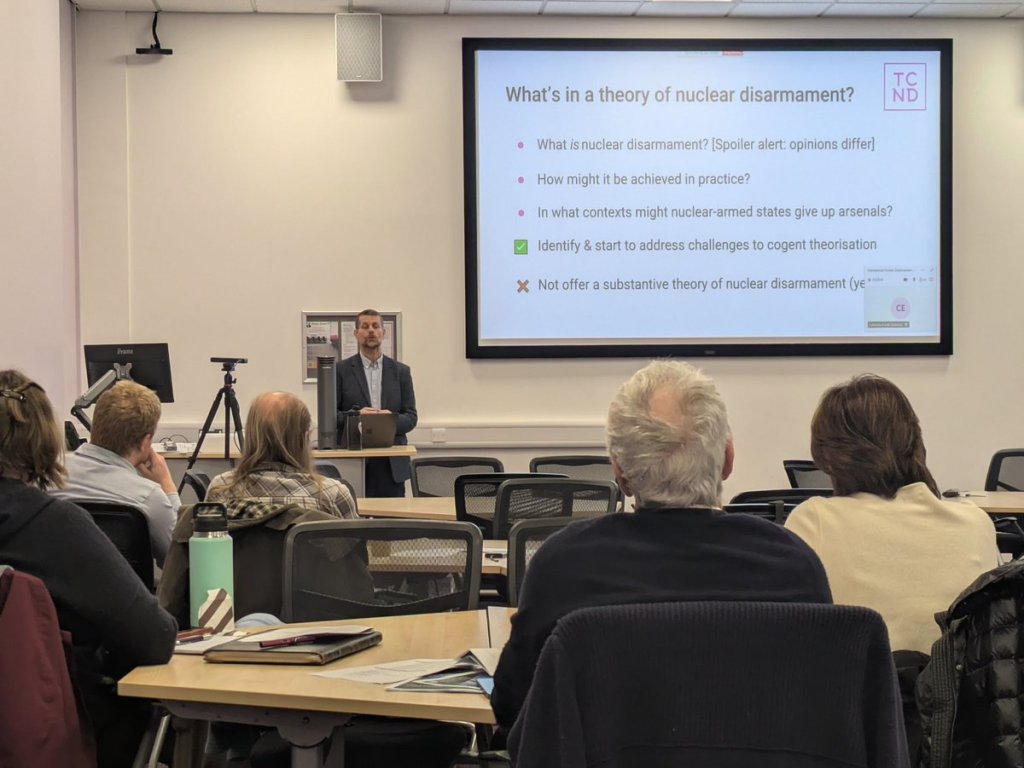
Diversity was the highlight of this workshop. We commend the organisers for their efforts on ensuring voices of the Global South were represented as well as paying careful attention to a gender balance. The interdisciplinary nature of the workshop also deserves attention and remains critical for advancing research and thinking about peace and disarmament. The nuclear weapons issue is deeply entrenched in relations of power which not only work to reaffirm particular forms of knowing the nuclear world but also silence important actors and their experiences.
While nuclear disarmament efforts involve working towards achieving a greater understanding of this world to enable peeling away the layers of value legitimising the bomb, it also rests on greater engagement with the voices and stories that have been kept at the margins. Opportunities like this make us hopeful about the world and its possible futures while certainly fostering our enthusiasm about learning and collaborating with others to reduce the risk of a nuclear war.
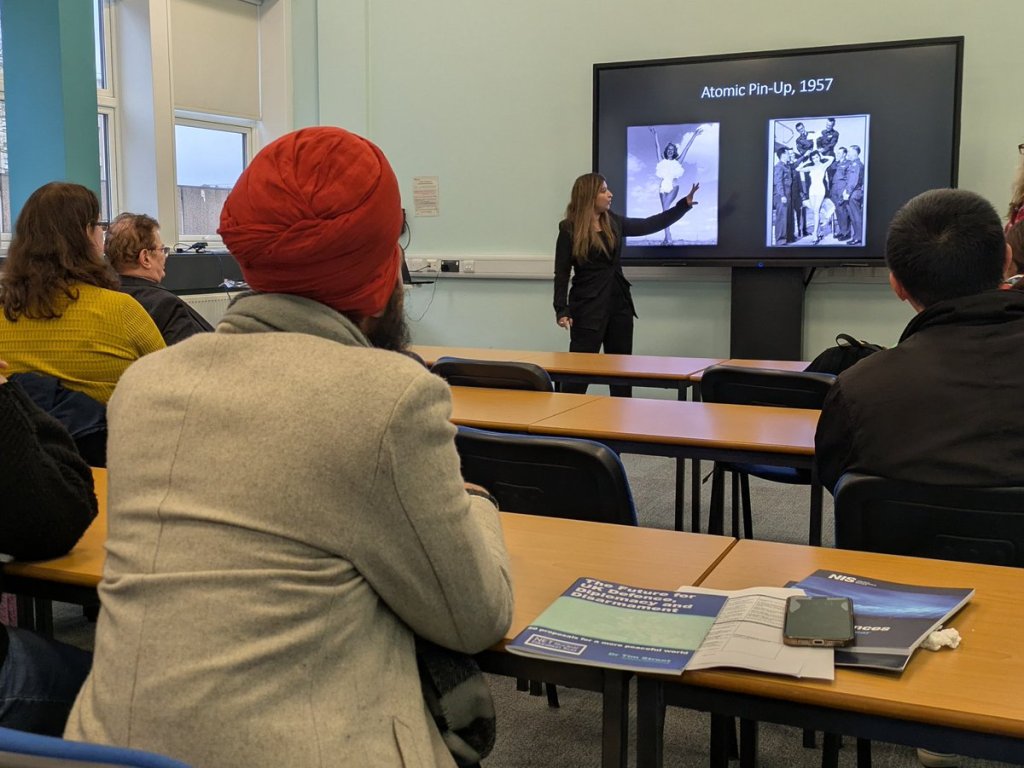
The workshop marks an important milestone for the Atomic Anxiety project. Bradford is the first public facing event we participate in as a newly formed team, and we are grateful for the opportunity to present some of our initial thoughts and ideas to such an engaged and constructive group of people. Most importantly, we appreciate the thoughtful feedback and interesting questions and hope our engagement will help fellow panellists to develop what we thought were brilliant project ideas.
Although the third nuclear age presents us with incredibly complex challenges that at times can make us feel less optimistic, nuclear disarmament remains an integral part of what this new nuclear age is and becomes in the foreseeable future.
By Dr Carolina Pantoliano.
 Atomic Anxiety in the New Nuclear Age
Leave a comment